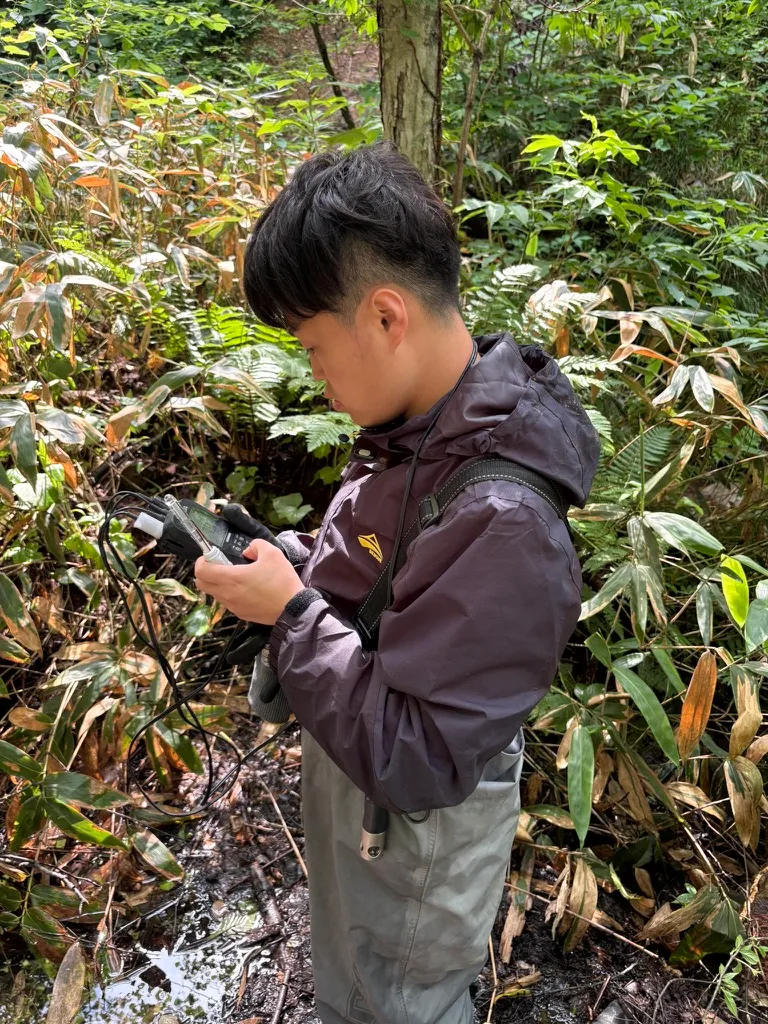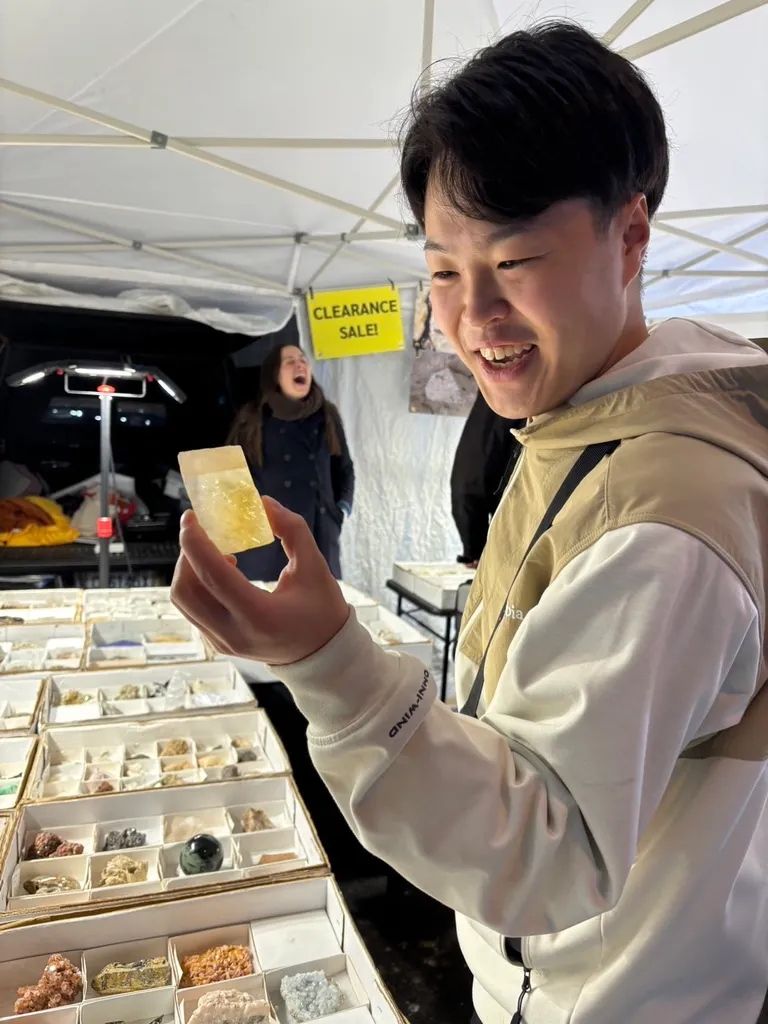
Sapporo · 2026.04.30 · Field note no. 1
Ryoya Sato is commercialising a process that turns acid mine drainage into a carbon removal opportunity by adding basalt and limestone to untreated mine wastewater, simultaneously neutralising the effluent and permanently sequestering CO₂. CDR² has secured ¥5M from the GAP Fund and ¥3M from NEDO NEP, with field trials at three Hokkaido sites planned for 2026 and revenue projected to reach ¥221M by 2030.
CDR² (CDRsquared) pairs mine wastewater treatment with carbon dioxide removal (CDR) to generate domestic, internationally certifiable carbon credits. The company runs two business lines. Model A distributes basalt and limestone at untreated acid mine drainage sites, mineralising CO₂ as it neutralises the water; revenue comes from selling the resulting CDR credits, plus a 10% wastewater treatment fee from the mine operator. Model B installs CO₂ measurement devices at already-treated mine drainage sites and sells subscription-based carbon accounting and consulting on top of the data.
Japan still produces almost no high-integrity, durable CDR credits at scale. Meanwhile, abandoned and inactive mines across the country discharge acid drainage that has been treated as a multi-decade liability. CDR² turns that liability into a credit-grade input — measured, verified, and priced.
Co-founder Riki Takeda brings prior startup operating experience. Technical work draws on three decades of rock weathering and wastewater research from Prof. Tsutomu Sato (Hokkaido University); wastewater process design and LCA/TEA are led by Fugo Nakamura. External support comes from Akifumi Takigawa (former Mitsubishi Corporation, now venture capital).